



Open Roads, Hidden Risks: What Every Polk County Driver Should Know About Rural Road Safety
When you think about dangerous roads, you probably picture a busy city intersection or a packed highway during rush hour. You may not think about the ones that seem the safest, the quiet, two-lane roads that wind through groves and farmland. The long rural stretches where you might not see another car for a mile.
The Polk Transportation Planning Organization (TPO), along with the Florida Department of Transportation (FDOT), tracks traffic crash pattern data across Polk County, Florida. The numbers tell a story that surprises most people.
Crash patterns reveal that high speeds, simple road design, heavy truck traffic, and limited lighting make rural crashes less frequent than urban ones, but far more likely to be fatal.
What is a Rural Road?
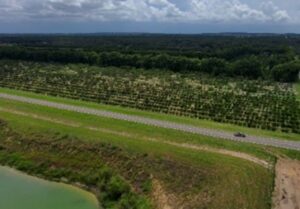 A rural road is any road located outside of an urbanized area. These are roads that serve lower-density communities, agricultural land, and natural areas rather than city centers and suburban neighborhoods. In Polk County, that includes portions of State Road 60 to the east, State Road 37 to the south, and State Road 33 to the north. They are typically two-lane, undivided highways with higher speed limits, few traffic signals, and minimal infrastructure, such as sidewalks or streetlights.
Rural roads are the backbone of how people in smaller communities get to work, take their kids to school, and move goods across the county. They may seem simple and straightforward, but their design carries real risks.
Why Quiet Roads Can Be the Most Dangerous
From 2017 to 2021, more than 83,000 people died on rural roadways across the United States. That accounts for 43% of all roadway deaths, even though only 20% of the U.S. population lives in rural areas. In 2022 alone, 17,283 traffic fatalities occurred on rural roads, and the fatality rate per 100 million vehicle miles traveled was 1.5 times higher in rural areas than in urban areas, according to the National Center for Statistics and Analysis.
Many rural roads were built decades ago and were never designed to handle the speeds and traffic volumes they carry today. They often lack physical barriers like medians or guardrails to separate opposing lanes of traffic. That means a single moment of distraction or a misjudged passing maneuver on a two-lane highway can lead to a devastating head-on collision.
The Polk County Picture
Polk County’s geography and economy add layers of risk that are unique to this region. Our rural corridors do not just serve local traffic. Polk County is a major freight and agriculture hub, and that means roads like State Road 60 carry a steady mix of freight trucks, agricultural vehicles, and regional through-traffic alongside everyday drivers. These large vehicles take longer to stop, increase the severity of any crash, and often lead other drivers to attempt risky passing on two-lane roads.
The landscape itself creates challenges. Curves, hills, tree lines, and hidden driveways reduce visibility for drivers. Lightly controlled intersections in rural parts of the county can catch drivers off guard, especially visitors or commuters who are unfamiliar with the area.
For people walking and biking, the risks are even greater. Most rural roads in Polk County have no sidewalks, bike lanes, or paved shoulders. Data from the Polk TPO Envision 2050 Long Range Transportation Plan shows that rural areas experience a disproportionate share of bicyclist fatalities. Without a safe space for non-motorized users, simply walking along a rural road can be dangerous.
It Is Not Just the Roads. It Is How We Drive Them.
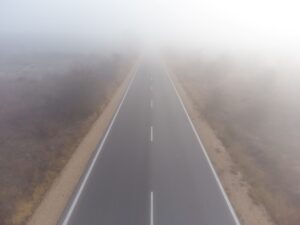 There is a psychological component to rural road danger that is easy to overlook. When a road feels empty, drivers tend to speed up, check their phones or pay less attention to their surroundings. The openness of a rural road can create a false sense of security. At 55 mph, a moment of inattention leaves little room for error on a narrow two-lane highway.
Rural areas also tend to see higher rates of impaired driving and fewer law enforcement patrols. Add loose gravel, potholes, uneven pavement, and unlit road stretches, and the risks for serious crashes add up fast.
When a crash does happen on a rural road, the consequences are often worse. Longer trips to trauma centers and longer EMS response times mean survivable injuries can become fatal. This happens because it takes longer to arrive.
Weather, Wildlife, and the Unexpected of Rural Travel
Anyone who drives in Polk County, Florida, knows the challenges that come with our environment. Fog rolls in during early mornings. Heavy rain can reduce visibility to near zero in seconds. Flooding can cover low-lying rural roads without warning. On rural stretches, drivers may encounter wildlife crossings, from deer to alligators to livestock. These are hazards that no amount of driver skill can fully predict and they are far more common on rural roads than in town.
Making Rural Roads Safer
 The good news is that we know what works. Transportation engineers have identified proven safety improvements that have proven to make a meaningful difference on rural roads.
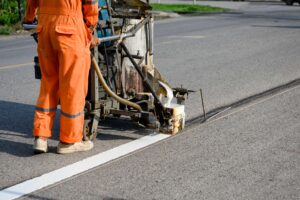
Centerline rumble strips alert drivers who drift into opposing lanes by causing vibrations and audible noise, and rumble strips have been shown to reduce head-on and sideswipe crashes by more than 45%. Widening the road shoulders (by more than 5 feet) can reduce accidents by more than 70%. Better road markings and improved lighting can all help reduce nighttime crashes.
Many of these improvements happen during routine maintenance and road resurfacing projects. This makes them a cost-effective means of saving lives. It also avoids waiting for a full road reconstruction.
How Is Vision Zero Polk Working Toward Safer Roads?
This is where Vision Zero Polk comes in. It is a commitment by Polk County and its transportation partners to reduce traffic deaths and serious injuries with the goal of ultimately reaching zero. That goal applies to every road in the county, including the rural corridors that often get overlooked in conversations about traffic safety.
Through Vision Zero Polk, Polk TPO is working with local governments, FDOT, law enforcement, and community members to identify the most dangerous rural road segments, prioritize safety improvements, and invest in infrastructure that protects everyone, whether they are driving, biking, or walking.
But this work is not just about engineering. It is about awareness. Every resident of Polk County plays a role in making our roads safer. That means slowing down on rural roads. Stay focused behind the wheel. Give trucks and farm vehicles plenty of space. Speak up when you see a road condition that puts people at risk.
Your Voice Matters
If you live, work, or travel through rural parts of Polk County, your experience matters. Polk TPO wants to hear from you about the roads you use every day and the safety challenges you see firsthand.