


The Hidden Cost of a Crash in Polk County
When a crash happens on a Polk County road, most people only see a glimpse of it. The flashing lights, scattered debris and slowed traffic.
The true cost of that crash starts long before traffic clears and continues long after. The cost reaches into hospital rooms, household budgets, county agencies and local businesses.
Vision Zero Polk is built on a simple idea that crashes are preventable and no one should die or be seriously injured just trying to get where they are going. Understanding what a single crash costs makes it clear why prevention is worth the investment.
What Is the True Impact of Traffic Crashes in Polk County, FL?
Polk County, Florida, continues to experience a high number of crashes. The Florida Department of Highway Safety and Motor Vehicles (FLHSMV) reported 12,000 Polk County crashes in 2025, including 103 fatalities. As the county population grows and roadways become busier, both the number of crashes and their consequences continue to climb.
Behind each of those numbers is a family. Some of the costs they face are expected, such as medical bills and lost wages. Others are harder to measure, like physical pain and grief. To capture the full picture, safety researchers assign a dollar value to the health and quality of life a crash takes away called quality-adjusted life years (QALY).
The Toll on Families

Losing a loved one in a sudden, violent crash creates emotional trauma. Families often experience shock, a loss of security and difficulty accepting what happened. Grief of this kind can affect daily functioning, making it hard to concentrate, make decisions or face reminders connected to the crash.
The physical and behavioral effects of grief can be just as serious. Survivors and family members may struggle with sleep problems, appetite changes, chronic fatigue and heightened stress. On top of that comes unexpected financial strain, shifting household roles and the needs of surviving children. Specialized grief counseling and structured support can help families adjust and recover over time, and Polk County is home to several community-based grief resources, including counseling centers and individual counselors.
How Much Do Traffic Crashes Cost the Public?
Every crash triggers a coordinated response from multiple public safety agencies. For example, a fatal head-on collision demands immediate resources from fire rescue, emergency medical services (EMS), law enforcement and sometimes air-medical services. Each response requires equipment, vehicles, fuel and medical supplies. Even when a victim does not survive, EMS and hospital teams provide full trauma-level care until death is confirmed. All of these resources generate costs.
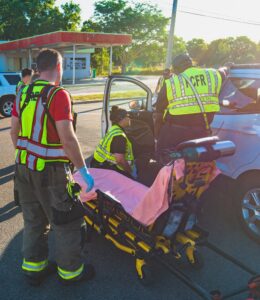
The expenses continue well after the scene is cleared. Law enforcement must conduct a full crash investigation involving additional personnel, crash-reconstruction specialists and detailed reporting. Fatal crashes require medical examiner services and formal documentation in national crash databases such as the Fatality Analysis Reporting System (FARS), add administrative and data-processing costs for public health agencies.
In the event of survival there are the medical bills which include emergency room care, inpatient and outpatient hospital services, physical therapy, rehabilitation, prescriptions, prosthetic devices and home modifications. Combined with Florida’s medical-billing system, where ambulance transport, emergency care and hospital services generate substantial charges, a single fatal collision produces major costs for both healthcare systems and county emergency-response budgets.
The Ripple Effect on Our Economy
Crashes also create economic impacts that are easy to overlook. Businesses lose productivity when employees are injured, delayed or unable to work. Workers lose wages, benefits and sometimes their jobs. Lawsuits that follow a crash add court and legal costs. Even the drivers who were sharing the roadway and got stuck behind a crash pay a small price too, in lost time and fuel.
Major corridors such as Interstate 4, U.S. Highway 98 and State Road 60 already carry heavy traffic. When a crash closes lanes during peak travel times, it can slow thousands of drivers, delay freight, their deliveries and disrupt business operations across the region. Frequent delays can also affect tourism and local commerce.
There is one more cost that rarely gets counted. Florida’s official crash databases do not report Polk County-specific repair costs for damaged infrastructure such as traffic signals, signs, guardrails, roadway surfaces, lighting and drainage, or for debris and hazardous spill cleanup. When the driver responsible has no insurance, those repair costs can fall on county budgets, meaning the taxpayers.
The True Cost of Traffic Crashes
Because Polk County does not publish emergency-response cost data, the most reliable way to estimate the full public cost of a crash is the national model from the Federal Highway Administration (FHWA). FHWA’s 2025 updated crash cost figures estimate the full cost of a crash to society based on how severe it is. These figures include emergency response, medical care, property and infrastructure damage, lost productivity and quality-of-life loss.
| Crash Severity | Estimated Comprehensive Cost |
|---|---|
| Fatal Crash | $15,988,000 |
| Suspected Serious Injury | $1,705,100 |
| Suspected Minor Injury | $384,000 |
| Possible Injury | $204,600 |
| No Injury (Property Damage Only) | $18,100 |
When applied to Polk County, the 103 lives lost on our roads in 2025 represent an estimated economic impact of nearly $1.65 billion (103 fatalities x $15,988,000 per fatal crash). That figure reflects only fatal crashes before accounting for thousands of injury crashes and property‑damage crashes that also carry substantial costs.
Of the roughly $16 million cost of a single fatal collision, more than $300,000 reflects direct public costs for fire rescue, EMS, law enforcement and roadway operations for each crash. When multiplied across the 103 fatal crashes in 2025, those costs alone total approximately $30.9 million.
Why Vision Zero Matters
No spreadsheet can capture what it means to lose a parent, a child or a friend. But the numbers make one thing clear, crashes drain our community of lives, health and resources we can never fully recover.
Vision Zero Polk aims to change that by treating every traffic death as preventable. Safer road design, slower speeds and better choices behind the wheel save lives, reduce financial strain on families and lower the burden on the public systems we all pay for. Preventing crashes means fewer injuries, less hardship and a safer county for everyone.
Want to be part of the solution? Explore the Polk Vision Zero Action Plan and share your input on making our streets safer.