



Why High Speeds Are So Dangerous on Polk County Roads
Speeding may seem harmless on a long rural road, but even small increases in speed can turn mistakes into life-changing crashes. Higher speeds make collisions more severe, reduce the time drivers have to react and wear down our roads faster. Polk County’s mix of fast-growing suburbs, heavy truck traffic, limited lighting on rural roads and few shoulders makes speed one of the biggest safety challenges we face. The Polk Transportation Planning Organization (TPO) wants you to know why vehicle speeds matter, how they affects real-world driving conditions here in the county and why managing speed is a key part of TPO’s Vision Zero commitment.
Speeding Is Common. That Doesn’t Make It Safe.
Speeding has become an everyday part of driving in Polk County, Florida, to the point that many people hardly think twice about it. Surveys from groups like the AAA Foundation for Traffic Safety have shown that throughout the United States, even when drivers know speeding is risky, they still admit to speeding. Think about when you drove to work this morning, were you speeding?
On our two-lane rural roads, where families, workers and neighbors share the same stretches, those extra miles per hour can be the difference between a close call and a tragedy. A Vision Zero approach begins with recognizing that no one sets out to cause harm. Small choices behind the wheel can have significant consequences for the entire community.
How Does Speed Actually Make Crashes More Deadly?
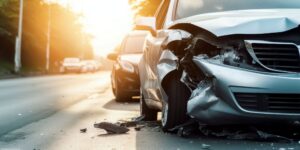
Even exceeding the speed limit by a few miles per hour (mph) can have a large impact on your safety in the event of a traffic crash. The higher the impact speed, the greater the fatality and injury risk to motorists, pedestrians and other non-motorists. The risk rises dramatically at speeds above 20 mph.
Speed multiplies danger because of basic physics. More speed means more kinetic energy, and that energy increases much faster than the speedometer number. A crash at 60 mph has four times the energy of a crash at 30 mph. On Polk County roads, where many speed limit signs are posted 55 to 70 mph, that difference often determines survival.
According to standardized calculations from the American Association of State Highway and Transportation Officials (AASHTO), the total stopping distance for a vehicle traveling at 30 mph is around 140 feet, at 60 mph it increases to over 300 feet, double the speed but an even longer stopping distance.
On rural roads with hidden driveways, farm entrances and limited sightlines, drivers often lack the space to navigate safely. As new neighborhoods appear along former country roads, drivers often miss the visual signs, like narrower lanes or changing speed limits, that naturally signal when to slow down.
Aggressive Driving Makes It Worse
Aggressive driving often results from heavy congestion, especially during rush hour at places like the U.S. Highway 27 and Interstate 4 (I‑4) interchange. Maybe you are running late for work, hurrying to pick up your child from school or simply feeling worn down by the stop‑and‑go traffic that tests everyone’s patience.
Behaviors such as tailgating, weaving through traffic, hard braking, rapid acceleration, and other signs of impatience or disregard for surrounding drivers all fall under aggressive driving. These actions raise the risk of a crash and create a stressful and unpredictable environment for everyone on the road, especially when combined with high speeds.
If you encounter an aggressive driver, the safest response is to stay calm, give them space and let them pass rather than engaging or reacting. Keeping your distance helps protect you, your passengers and everyone else sharing the road.
Roads Built for Yesterday’s Traffic
Roadways are designed for a specific operational purpose, but as land development and surrounding conditions change, a road can end up serving a very different role than intended. When that happens, the speed a road was originally built to handle may no longer be safe.
A large part of Polk County’s rural network began as farm-to-market routes, which were used by farmers to transport their produce to sell at the local market. Today, those same roads carry commuters, freight trucks and visitors traveling between Tampa and Orlando. Narrow lanes, limited shoulders and the absence of medians leave almost no room for error at high speeds.
Small Mistakes Become Deadly at High Speeds
At lower speeds, drivers can often correct mistakes, but at higher speeds, those same mistakes become deadly. Drifting out of a lane can lead to a head-on collision. Misjudging a left turn can result in a severe T-bone crash. Overcorrecting can cause a rollover or a run-off-road crash. Polk County sees a high number of fatal crashes in exactly these categories, and speed is a major contributing factor in each.
Trucks, Farm Equipment and Rural Roadside Hazards
Polk County, Florida, serves as a central hub for freight movement and distribution across the state. Large trucks need more time to stop and create far greater crash forces. A collision between a passenger car and a truck at highway speeds is rarely survivable.
Rural roads also lack “forgiving” features like curbs, barriers and lighting. Instead, drivers face ditches, trees and utility poles close to the pavement, objects that become deadly at high speeds.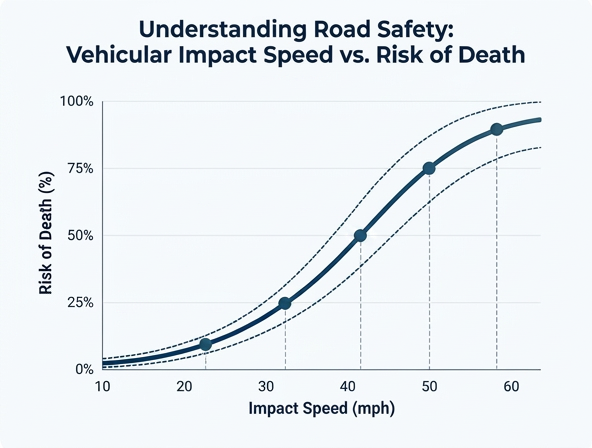
People Walking or Biking Are at Extreme Risk
A pedestrian struck at 20 mph has a strong chance of surviving. At 40 mph, the risk of death rises sharply. At 60 mph, survival is highly unlikely. Many rural Polk County roads lack sidewalks, bike lanes or safe shoulders, making high-speed traffic especially dangerous for anyone outside a vehicle.
Nighttime Makes Everything Worse
Many rural roads in Polk County are dark and unlit. At high speeds, drivers “outrun their headlights,” meaning they can’t see hazards, like deer, alligators, stalled cars, parked transports or sharp curves, until it’s too late.
What This Means for Vision Zero
In the Vision Zero framework, speed is the single most controllable factor influencing crash severity. Reducing speeds, through design, policy and community awareness, is one of the fastest and most effective ways to prevent deaths and serious injuries.
The Vision Zero initiative encourages local jurisdictions to adopt speed management policies. Enforcement and behavior-change tools, such as speed cameras, dynamic feedback signs and intelligent speed assistance, are proven strategies for reducing speeding.